
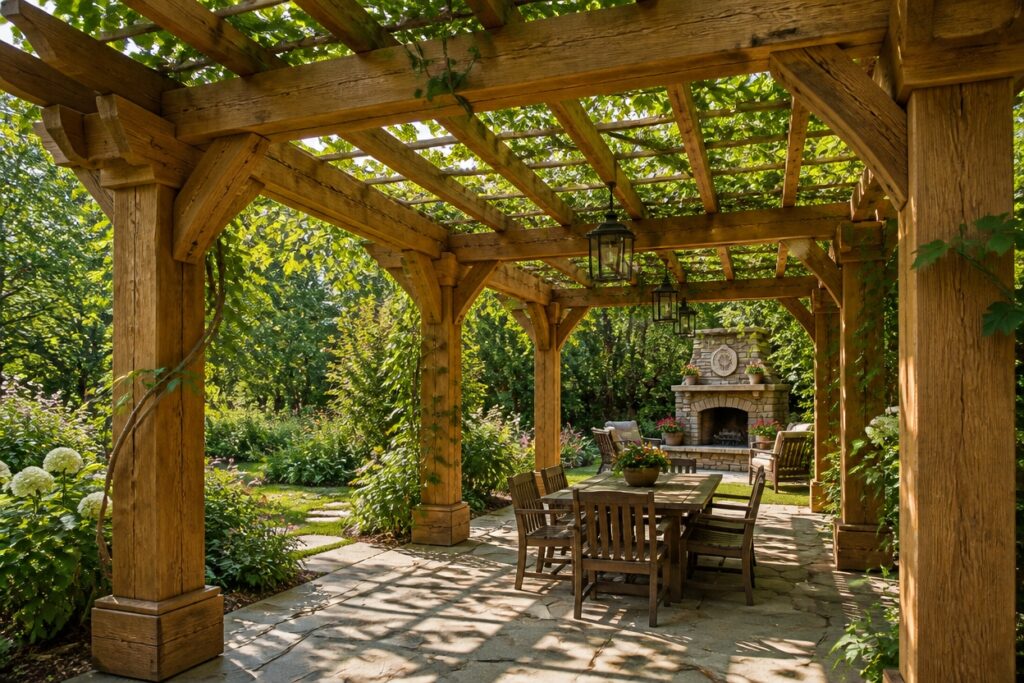
A timber frame pergola brings warmth and structure to outdoor spaces without closing them off. Built from cedar, redwood, or pressure-treated lumber, these open-beam shelters filter sunlight while keeping sightlines clear. They work equally well over a dining area, garden path, or quiet corner for morning coffee.
The overhead lattice or grid creates dappled shade that moves with the day. Air flows freely underneath, so you get relief from harsh sun without the stuffiness of a fully covered structure. It is a simple pleasure that makes spending time outside feel intentional.
Choosing the right spot matters as much as picking the wood. Consider how the sun tracks across your yard, where you actually want to linger, and how much upkeep you are willing to take on.
A well-placed pergola becomes part of the landscape rather than an afterthought.
What Is a Timber Frame Pergola? Design Basics and Open-Frame Appeal
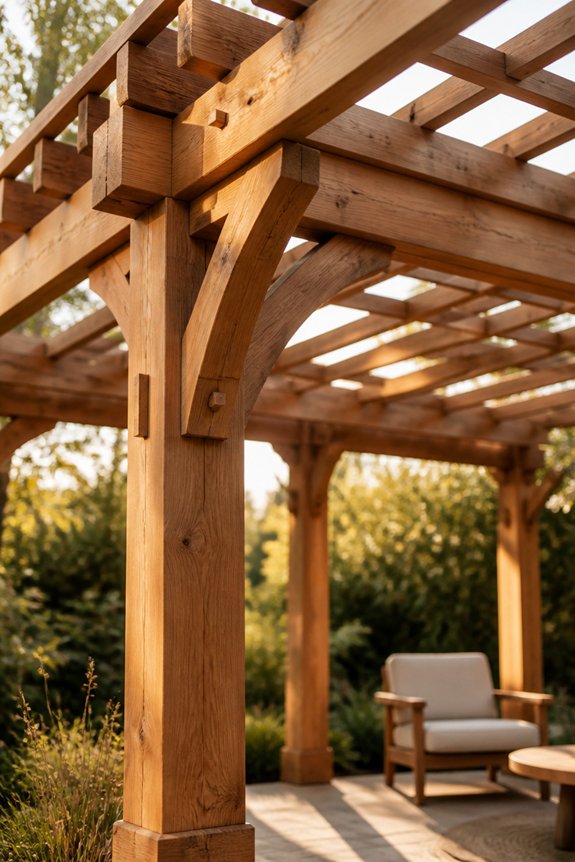
What Is a Timber Frame Pergola?
A timber frame pergola is an outdoor structure built from wooden beams. The beams are usually arranged in a grid or lattice across the top. This design gives you partial shade while still letting air and sunlight come through.
You will often see these structures made from cedar, redwood, or pressure-treated lumber. Each wood type brings its own look and lifespan. Cedar and redwood resist rot naturally. Pressure-treated lumber costs less but still holds up well outdoors.
Design Basics
The open-frame look keeps things visually interesting without feeling heavy. You get structure without clutter. Most pergolas range from eight by eight feet up to twenty by thirty feet. Size depends on your space and how you plan to use it.
People install them as garden focal points or shaded seating areas. Others let vines climb up and across the beams. Over time, plants can add even more shade and texture.
Open-Frame Appeal
The lattice top sets pergolas apart from gazebos or pavilions. Those have solid roofs. A pergola leaves things open to the sky. Rain will come through, but so will breezes and dappled light.
This style works especially well in mild climates. It also suits anyone who wants defined outdoor space without full enclosure. The timber framing adds warmth that metal or vinyl simply cannot match.
How Timber Pergolas Compare to Other Outdoor Structures
Timber pergolas fill a unique spot among outdoor structures. They blend beauty with open-air flow in ways other options simply cannot match.
Weather Protection vs. Light
Gazebos shield you from rain and harsh sun. Pergolas trade that full cover for gentle light and breeze. You get less shelter, but far more sunshine and air movement.
Coverage Options
Solid patio covers block everything overhead. Pergolas filter light instead. The result is dappled shade that shifts throughout the day. Many find this more pleasant than total darkness.
Purpose and Scale
Arborstend to mark an entrance or path. They are charming but small. Pergolas stretch overhead to define entire seating or dining areas. They invite people to gather, not just pass through.
Aesthetic Openness
Shade structures and awnings cut glare effectively. Yet they often feel closed in. Timber pergolas keep sight lines clear. You stay connected to your garden, your view, and the sky above.
The Bottom Line
No single structure does it all. Pergolas hit a sweet spot: partial shade, open sight lines, and natural beauty. For many homeowners, that balance is worth the trade-offs.
Where to Place Your Timber Frame Pergola: Standalone vs. Attached
Attached Pergolas
These connect right to your home. They shade patios, decks, or entryways. You also need less yard space.
They work best next to outdoor living areas you already use. Check your home’s style first. Match the pergola design to what you have.
Standalone Pergolas
These sit on their own in your yard or garden. You can put them almost anywhere. They become a natural focal point.
They suit garden centers or quiet corners perfectly. You get more freedom with size and shape too.
Key Things to Consider
Watch how sun moves across your space. Note where people walk most. Look up for power lines before you choose.
Your home’s look matters. So does how you plan to use the space. Pick the spot that fits your daily life.
Both choices add charm. Attached versions extend your home outward. Standalone ones create a destination. Either way, you gain beauty and shade.
Plants and Vines: Transforming Your Pergola Into a Living Canopy
Choosing Your Climbing Plants****
Plants and vines add the next layer of beauty and function to your pergola. Clematis, jasmine, and climbing roses all attach easily to timber frames. They create natural shade while drawing the eye upward. Ivy gives you thick, year-round coverage. Deciduous vines bring lovely seasonal changes to enjoy.
Training and Positioning Your Greenery
You can train vines along overhead beams with simple clips or ties. Container plants around the base add pops of color. They also give you flexibility to switch things up by season. Together, the vertical growth and surrounding plantings turn your pergola into a living garden feature. The finished look filters sunlight beautifully.
Design and Function: Creating an Outdoor Living Space
Shade and Shelter
A timber frame pergola adds more than beauty to your yard. It creates shade for hot afternoons. It also carves out a special spot for friends and family to gather. Homeowners often place one over a patio or deck. Others tuck theirs into a quiet corner of the garden.
Defined Outdoor Zones
Pergolas help separate your yard into useful areas. They mark spaces for eating, entertaining, or simply unwinding. The open roof lets soft sunlight filter through. It also offers partial cover when light rain arrives.
Furniture and Features
These structures hold outdoor tables, chairs, and benches with ease. Some homeowners add built-in seating along the sides. Others include storage for cushions and garden tools. The sturdy timber frame supports hanging lights or ceiling fans. Retractable shades can also attach for extra comfort on bright days.
What to Spend: Materials and Quality Trade-offs
Building a timber frame pergola means making choices about materials, quality, and how long you want it to last. Premium hardwoods like cedar and redwood cost more upfront. They also resist decay far better than softwoods such as pine.
Pressure-treated lumber fits tighter budgets and lasts about ten to fifteen years. It offers a middle ground between cost and durability. Your hardware choice matters too. Stainless steel prevents rust, but standard fasteners will need replacement sooner.
Professional builders ensure structural integrity and proper installation. DIY construction saves significantly on labor costs. Consider upfront expenses alongside maintenance needs and how often replacements might occur. Factor in your aesthetic preferences as well when making final decisions.
Will Your Pergola Hold Up? Durability Across Seasons
How Seasons Test Your Structure
Seasonal exposure puts timber frame pergolas through constant changes. Temperature swings and moisture cycles stress the wood over time.
Wood expands and contracts with humidity shifts. This movement can loosen joints gradually. Cedar and redwood naturally resist rot better than pine. These hardwoods often last fifteen to twenty years with little upkeep.
Treated lumber costs less upfront. It will need sealing every two to three years though.
Protecting Against Sun and Water
UV rays slowly fade and weaken wood surfaces. Protective stains help block this damage. They keep your pergola looking better for longer.
Winter brings its own challenges. Ice buildup adds weight to structural connections. Regular inspections let you spot cracks, discoloration, or soft spots early. Catching these issues prevents bigger problems later.
Good drainage matters too. Water should never pool on horizontal beams. Slight angles or gaps help it run off instead.
DIY or Hire a Professional? Installation Considerations
A pergola project invites a key decision. Will you build it yourself or bring in experts? Your experience, tools, and schedule matter here.
DIY works well for confident carpenters. You already own the right equipment. You can set aside solid blocks of time. Simple designs fit this path best. Labor savings stay in your pocket.
However, mistakes cost more later. A wobbly frame or poor anchoring shortens lifespan. Safety issues can emerge over time.
Professional installers offer clear strengths. They know local building codes by heart. Warranties protect your investment. Complex builds get proper structural attention.
Experts handle the full workflow. Site prep, post setting, beam alignment, and finishing all flow together. Their precision shows in lasting results.
Weigh several factors before choosing. Check permit rules in your area. Understand your soil and foundation needs. Match timber choices to your climate and design.
Tighter budgets often steer simple projects toward DIY. Intricate pergolas with custom angles or heavy spans reward expert input. Long-term performance depends on getting this call right.
Keeping Your Pergola in Shape: Maintenance and Seasonal Care
A timber pergola needs regular care to stand up to weather, rot, and wear. Check your structure each season. Look for soft spots, cracks, and loose fasteners.
Spring
Clear away leaves, moss, and mildew that built up over winter. A gentle scrub and rinse will refresh the wood.
Summer
Watch for pest damage and spots where water collects. Heat and humidity can speed up problems, so catch them early.
Fall
Clean out gutters and apply a fresh coat of wood sealer. This shields the timber before cold weather sets in.
Winter
Check for ice buildup and heavy snow loads. Remove excess weight to prevent stress on the frame.
Year-Round Tasks
Sand weathered areas once a year. Reapply stain or sealant to keep the wood protected. Swap out any damaged boards as needed.
Good drainage stops water from pooling and causing rot. Stay on top of these simple jobs, and your pergola will last for years.
Frequently Asked Questions
Can I Install a Timber Pergola on a Rental Property or Apartment Balcony?
Installing a timber pergola on rental property requires landlord approval, as modifications typically need permission. Tenants risk security deposit loss or lease violations. Portable alternatives or removable structures may be acceptable options to discuss with property management.
What Permits or HOA Approvals Are Required Before Building a Timber Pergola?
Building permits and HOA approvals are typically required before constructing a timber pergola. Requirements vary by location and property type. Builders should consult local zoning codes and submit plans to HOAs or municipal authorities for approval before beginning construction.
How Much Weight Can a Timber Pergola Roof Safely Support?
A timber pergola roof typically supports 20-40 pounds per square foot, depending on wood species, beam size, spacing, and local snow loads. Structural engineers calculate specific capacities based on individual design specifications and environmental conditions.
What Is the Typical Lifespan of a Timber Frame Pergola?
Timber frame pergolas typically last 15 to 20 years with proper maintenance. Durability depends on wood type, climate conditions, and regular treatment against rot, insects, and weather damage. Quality construction extends lifespan considerably.
Can a Timber Pergola Be Relocated or Moved to a Different Location?
Timber pergolas can be relocated, though the process proves challenging. Permanent installations require dismantling, which may damage wood joints and connections. Relocating demands careful deconstruction, transportation, and reinstallation by professionals, making it costly and time-intensive.
Conclusion
A timber frame pergola serves as a practical outdoor structure, combining aesthetic appeal with functional shade provision. Homeowners select cedar, redwood, or pressure-treated lumber based on climate and budget considerations. Proper maintenance, including annual sealing and bolt inspections, extends the pergola’s lifespan considerably. Whether freestanding or attached to existing structures, these Victorian-era designs remain relevant today. Professional installation guarantees structural integrity, though DIY construction suits experienced builders with appropriate tools.