
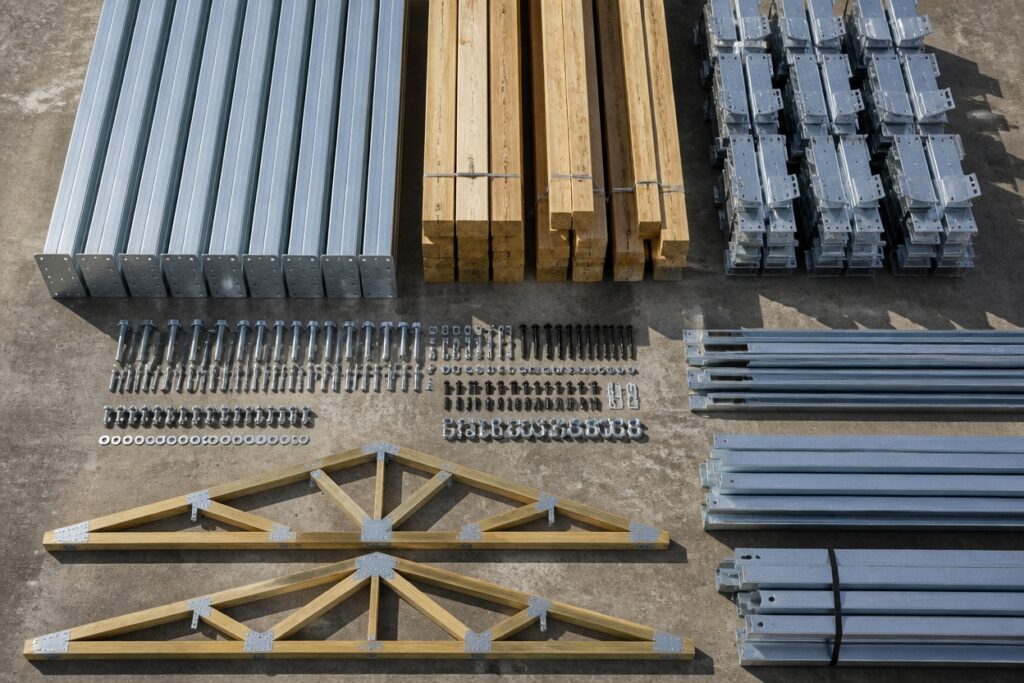
Pole building kits are having a moment. More homeowners are discovering them as a straightforward path to extra storage, workshop space, or even a cozy barndominium.
But before you click buy, it helps to know exactly what arrives on that delivery truck.
Most kits include the bones of your building: treated posts, beams, girts, roof trusses, wall panels, and metal siding. The fasteners come too, along with pre-cut lumber and assembly plans that take some guesswork out of construction. It is a nice starting point, though not the whole story.
Roofing materials, insulation, and site preparation usually sit outside that base price. Budgeting for these extras upfront keeps your project moving smoothly.
A quick review of what is actually bundled versus what you will source separately saves both money and headaches down the road.
What’s Actually Inside a Pole Building Kit
Core Structural Pieces
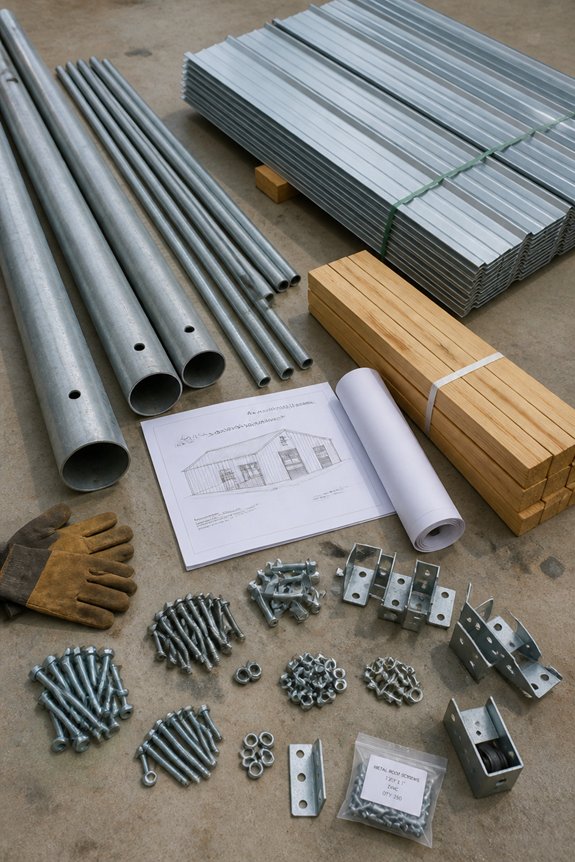
A pole building kit comes with the bones of your building. You’ll find treated wooden posts, beams, girts, and roof trusses. These frame your structure from the ground up.
Walls and Roofing
Wall panels and metal siding are typically part of the package. Fasteners, bolts, nails, and brackets hold everything together. You’ll also get trim pieces and flashing for clean edges and weather protection.
Time-Saving Extras
Some kits include pre-cut lumber. This speeds up your build and reduces on-site work. Manufacturers usually add detailed plans and spec sheets too. Foundation materials and concrete anchors might come along, depending on which package you pick.
Before You Order
Always check your component list against your actual building dimensions. Sizes vary, and you want every piece to fit your project.
Posts, Beams, and Structural Components Explained
The Frame’s Foundation
Posts and beams carry all the weight of your building. Posts, typically pressure-treated 6×6 or 8×8 lumber, anchor the frame firmly in the ground. Beams connect these posts horizontally to spread loads across the structure.
Layered beams, often 2×10 or 2×12 lumber, add strength where it matters most. Girts run across the beams for extra bracing. Your kit includes lumber, bolts, brackets, and all needed hardware. Together these parts create a rigid framework that handles roof loads, wind, and snow with ease.
Fasteners and Hardware Your Kit Includes
Your pole building kit comes with all the fasteners and hardware you need. These small but vital parts keep your structure strong and secure. You’ll find bolts, screws, nails, and specialty connectors inside.
Bolts handle your biggest connections. They usually run from half-inch to three-quarter-inch diameter. Screws and nails hold your roofing, siding, and interior pieces firmly in place.
Metal brackets and gusset plates add extra strength at corners and beams. Washers and nuts come with every bolt. They spread pressure evenly so nothing strains or cracks.
Most kits use galvanized or treated fasteners. This coating fights rust and stands up to weather year after year. Your manufacturer lists exact amounts and sizes for your project. Following those specs prevents weak spots and stops you from running short mid-build.
Common Add-Ons and Hidden Costs to Budget For
Most pole building kits come with fasteners and hardware. But your final project usually needs extra materials beyond the basics.
Roofing materials, siding, insulation, and doors rarely come standard. Concrete for foundation work often runs into thousands of dollars. Electrical wiring, plumbing, and HVAC systems add major costs too.
Site preparation can surprise you. Grading and drainage work add up quickly. Paint, sealants, and weatherproofing products are easy to forget but matter for longevity.
Permitting fees, labor, and equipment rental deserve a line in your budget. Always review detailed specifications before you start. Catching hidden expenses early keeps your project on track.
Verify Your Kit Contents Before Purchasing
Get the Full Materials List First
Ask your manufacturer for a complete list before you order. This document should spell out every component you’ll receive. Look for lumber sizes, hardware counts, roofing materials, and fasteners.
Cross-Check Against Your Plans
Compare the list to your building plans. Make sure beam sizes, post spacing, and panel counts line up with what you need. This step takes a few minutes now but saves you from big headaches later. Missing items or wrong specs can derail your project and force you to place extra orders.
Frequently Asked Questions
How Long Does It Typically Take to Assemble a Pole Building Kit?
Assembly time for pole building kits typically ranges from several days to several weeks, depending on structure size, complexity, and the number of workers involved. Most small-to-medium projects require one to three weeks.
Do I Need Special Tools or Equipment to Construct a Pole Building?
Most pole building projects require standard construction tools like hammers, saws, drills, and levels. Some builders rent specialized equipment such as post hole diggers or boom lifts for larger structures, though many kits accommodate basic hand tools.
Are Building Permits Required Before I Can Start Construction?
Building permits are indeed required in most jurisdictions before pole building construction begins. One must contact local authorities to determine specific zoning regulations, setback requirements, and structural codes applicable to their property location.
What Warranty Coverage Does a Standard Pole Building Kit Include?
Standard pole building kits typically include manufacturer warranties covering structural components, framing materials, and roofing systems for ten to twenty years. Coverage specifics vary by manufacturer and kit type, requiring buyers to review individual warranty documentation carefully.
Can I Modify the Design After Purchasing My Pole Building Kit?
Most pole building kit manufacturers allow design modifications, though options vary by company. Some permit minor changes at no cost, while significant alterations may incur additional fees or require custom engineering approval before proceeding with construction.
Conclusion
Pole building kits deliver the core structural framework—posts, beams, trusses, fasteners—ready for assembly. Buyers should examine itemized lists carefully, noting what remains absent: roofing materials, insulation, site preparation. Hidden costs accumulate quickly beyond the initial package price. Verifying contents before purchase prevents construction delays and budget overruns. Understanding these inclusions and gaps guarantees informed decisions and realistic project planning.