
Starting a construction project is exciting. It is also a little overwhelming. From kitchen refreshes to small office buildouts, the details matter more than most people expect.
Smart planning keeps things calm. It protects your budget, your timeline, and your sanity. A little structure now prevents headaches later.
We put together a simple roadmap for homeowners and small business owners. Think clear budgets, trusted contractors, and realistic timelines. These are the essentials that make projects actually enjoyable.
Define Your Project Scope and Goals
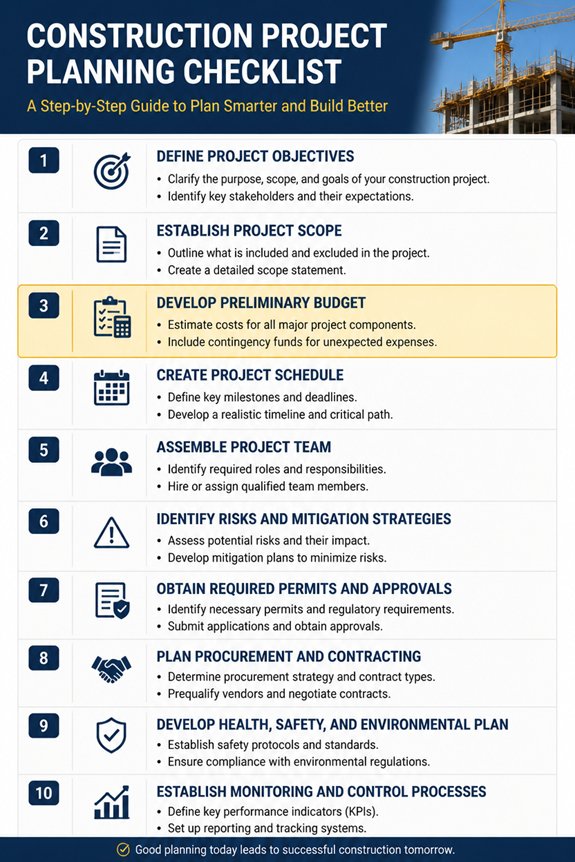
Clear boundaries keep your project on track. Start by deciding what work will happen and where. Identify the materials you need and which spaces need attention.
Your goals need real numbers. Set a firm completion date. Pick a budget cap. These targets prevent surprises later.
Write everything down. Note room sizes, finish choices, and required permits. Good documents stop expensive changes. They also prevent misunderstandings and delays.
Share the scope with everyone involved. When all parties understand their roles, work moves forward smoothly.
Create a Realistic Budget and Financial Plan
Creating Your Budget
Start by collecting quotes from contractors, suppliers, and service providers. This gives you a clear picture of real project costs.
Request several estimates for every major expense. Compare prices carefully. Identify material costs, labor fees, and needed contingency reserves separately.
Building Your Contingency Fund
Set aside ten to twenty percent of your total budget for surprises. Structural damage, permit delays, or supply issues can derail even careful plans.
This reserve protects you when unexpected problems appear. You will handle setbacks without scrambling for funds mid-project.
Tracking and Adjusting
Document every expense as it happens. Track payments closely. Check your actual spending against projections regularly.
These reviews catch problems early. Small adjustments now prevent major overruns later. Your project stays financially sound from start to finish.
Staying on Course
Schedule brief financial check-ins throughout your project. Review where money has gone and what remains ahead.
This habit keeps your budget realistic and your goals achievable. A sustainable plan gets you to completion without unnecessary stress.
Secure Permits and Understand Local Regulations
Understanding local regulations and securing permits is critical for any construction project. Building permits, electrical permits, and plumbing permits are common requirements. These vary by location, so check with your local building department early.
You will need to submit detailed plans and pay associated fees. Inspections happen at specific stages. These include foundation, framing, and final completion.
Zoning laws determine what you can build. They also set setback distances and property usage rules. Non-compliance leads to fines, project halts, or mandatory corrections.
Permit timelines usually range from two to eight weeks. Project complexity and local processing capacity affect this timing. Plan ahead to avoid delays.
Hire and Vet the Right Contractors
Selecting qualified contractors shapes your entire project. It affects quality, timeline, and budget. Take time to get this right.
Check Credentials Thoroughly
Request references from at least three contractors. Verify their licenses and insurance coverage. Confirm their bonding status too. These steps protect you from liability and unfinished work.
Compare Estimates Carefully
Ask for detailed written estimates from each contractor. This helps you spot pricing differences. You’ll also see what each proposal actually includes. Don’t just look at the bottom line.
Research Their Track Record
Review past project portfolios. Call previous clients directly. Ask about work quality and reliability. Did the contractor finish on time? Were there surprises?
Discuss Terms Up Front
Good contractors explain timelines clearly. They outline payment schedules step by step. Warranty terms should be in writing. Get all of this before you sign anything.
Do Your Homework
Run background checks through local licensing boards. Look for disciplinary actions or complaints. Meet contractors in person when possible. This shows you their professionalism and communication style. A solid working relationship starts here.
Build a Construction Timeline
Laying the Groundwork
Contractors are in place. Now it is time to build a timeline that actually works. Project managers should break the job into clear phases. Think permits, foundation, framing, and finishing. Each phase gets its own realistic duration.
Complexity shapes how long things take. So does the weather. So does material availability. Build breathing room into every stage.
Gathering Estimates
Contractors know their own scopes best. They will give you time estimates for their pieces of the job. Collect these from everyone involved. Piece them together into one master schedule that shows the whole picture.
This becomes your roadmap. Everyone refers back to it.
Finding the Critical Path
Some tasks can happen alongside each other. Others cannot start until something else finishes. Critical path analysis spots these dependencies. It shows which delays would actually push your final date.
Focus your attention there. These are the tasks that matter most.
Keeping Tabs on Progress
Check progress against the timeline regularly. Weekly works well for most projects. Catching a delay early gives you options. You can reallocate crew, adjust sequences, or bring in extra help.
Small fixes early beat major overhauls later.
Recording Changes
Timelines shift. That is normal. Document every adjustment as it happens. Note the reason, the new date, and who approved it.
Clean records protect everyone. They also help you plan better next time.
Plan for Inspections and Quality Checkpoints
Scheduling Quality Checkpoints****
Build inspections into your timeline like any other task. They should happen at key stages: foundation, framing, electrical, plumbing, and final wrap-up.
Working With Inspectors
Building inspectors check code compliance, structural integrity, and safety standards. Project managers need to book these dates early with both contractors and inspectors. A little advance planning goes a long way.
What Gets Checked
Rough-ins happen before drywall goes up. HVAC systems need verification. Waterproofing requires careful review. Each checkpoint generates documentation. This paperwork tracks completed work and flags any issues that surface.
Why Inspections Matter
Proper scheduling prevents expensive rework down the road. It also keeps your project in line with local regulations at every phase. Skipping steps now can create big problems later.
Prepare a Contingency Plan for Delays and Changes
Understanding the Need
Construction projects rarely go exactly as planned. Weather turns bad. Materials run out. Workers get sick. A solid contingency plan keeps your project moving when these problems hit.
Building Your Timeline Buffer****
Add extra time to every schedule. Ten to twenty percent works well for most projects. This cushion absorbs small delays without throwing everything off track.
Protecting Your Budget
Set aside financial reserves for surprise costs. Material prices jump sometimes. Design changes pop up mid-project. Your reserve fund handles these without stress.
Controlling Changes
Require written approval for any modifications. No verbal agreements. No quick texts. Document everything before work begins on changes.
Assigning Clear Roles
Pick one person to watch timelines and spending. This project manager spots problems early. They keep everyone informed and on track.
Keeping Communication Open
Talk with your contractors regularly. Weekly check-ins catch issues before they grow. Early warnings save time and money.
Staying Ready
Clear protocols reduce panic when disruptions occur. Everyone knows what to do next. Your project keeps momentum even when plans shift.
Frequently Asked Questions
How Do I Protect My Property and Belongings During Active Construction Work?
Research shows 40% of construction-related property damage stems from inadequate protection measures. Property owners should secure valuable items in locked storage, establish clear work zones, document existing conditions with photographs, and require contractors to carry extensive liability insurance.
What Insurance Coverage Do I Need for My Construction Project?
Property owners should obtain general liability insurance, workers’ compensation coverage, and builder’s risk insurance. These policies protect against injuries, property damage, and theft during construction, ensuring thorough financial protection throughout the project.
How Can I Minimize Noise and Disruption to Neighbors During Construction?
One achieves neighbor tranquility by scheduling work during daylight hours, using sound barriers, and communicating project timelines beforehand—a revolutionary concept apparently foreign to most construction sites where jackhammers sing at dawn.
What Communication Systems Should I Establish With My Contractor?
A contractor should establish weekly progress meetings, designate a primary contact person, create a shared communication channel for urgent issues, maintain a written log of decisions, and schedule regular site inspections to guarantee alignment on project expectations.
How Do I Handle Disputes or Disagreements With My Contractor?
Approximately 80% of construction disputes stem from poor documentation. Parties should document disagreements in writing, review contracts, attempt mediation, and escalate to arbitration or legal counsel if unresolved.
Conclusion
A construction project flourishes when stakeholders honor the outlined framework. Defining scope, budgeting appropriately, obtaining permits, selecting contractors, establishing timelines, scheduling inspections, and preparing for adjustments form the foundation for steering the journey ahead. These elements work together, reducing complications and unexpected expenses. Homeowners and small businesses that embrace this structured approach experience smoother changes, fewer disputes, and projects that align with initial intentions and financial parameters.