
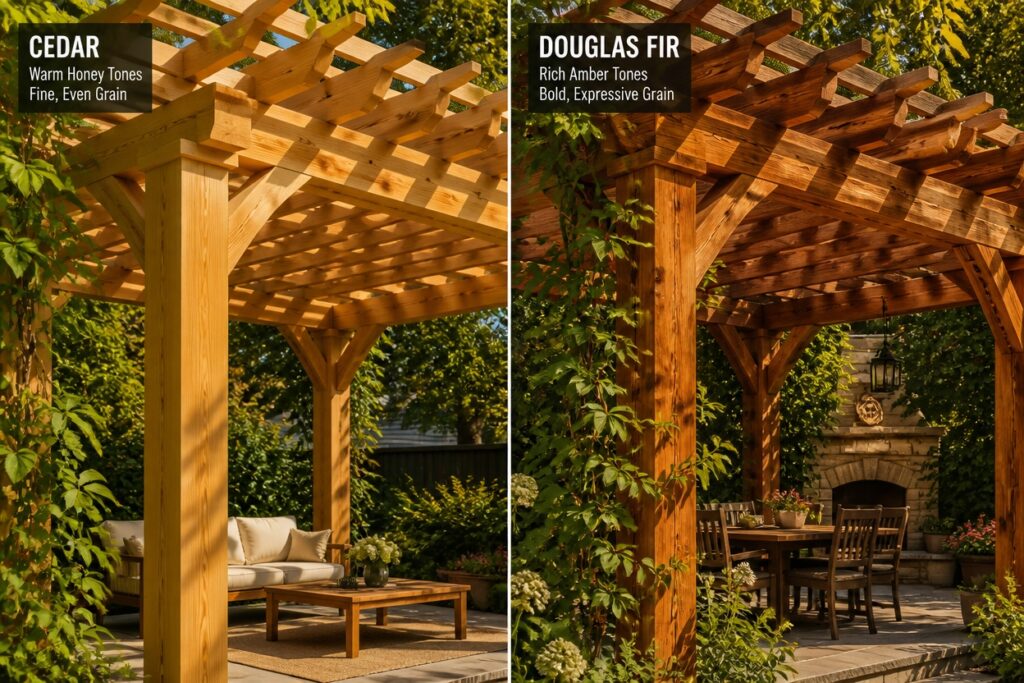
A pergola can transform your backyard into something special. But first, you need to choose the right wood. Cedar and Douglas fir are two favorites, and each brings something different to the table.
Cedar has a quiet charm. It resists rot on its own and asks very little of you over the years. Left to the elements, it will hold steady for 15 to 20 years, silvering softly as it ages.
Douglas fir is the sturdy workhorse. It carries heavier loads with ease, though it does need regular care to stay strong. A little maintenance goes a long way with this one.
Your climate, budget, and how you plan to use the space will point you toward the right choice. Neither wood is perfect for everyone, but one will feel just right for your project.
Durability and Rot Resistance: Cedar vs Douglas Fir
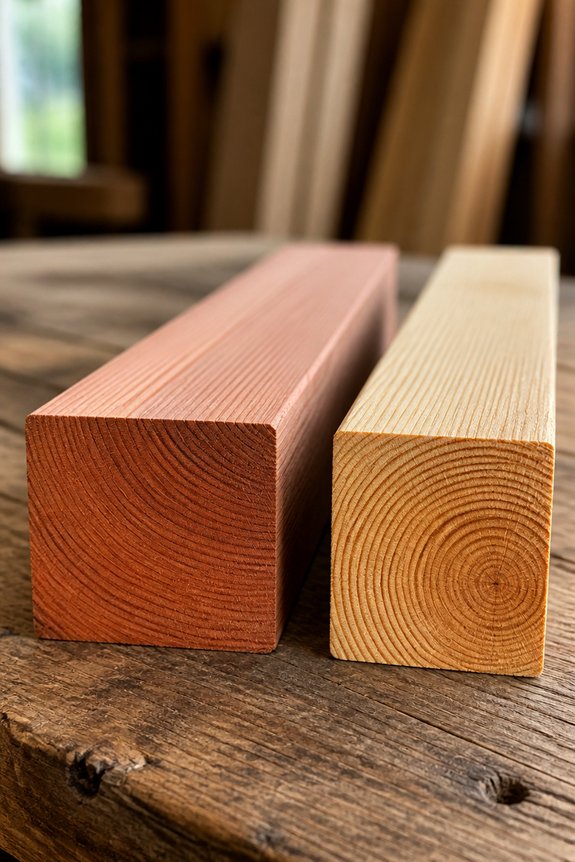
Choosing wood for your pergola means weighing rot resistance carefully. Cedar stands out here. Its natural oils fight fungal growth. This built-in protection gives it an edge over Douglas fir.
Cedar typically lasts 15 to 20 years outdoors with no treatment. Douglas fir lacks these protective oils. It needs regular sealing or staining to stay sound. Without that upkeep, it may weaken within 5 to 10 years in wet climates.
Both woods need good drainage and airflow. But cedar handles damp conditions far better. Douglas fir can work well if you stay on top of maintenance. For set-it-and-forget-it durability, cedar wins.
Structural Strength and Weight Capacity
Choosing the Right Wood for Your Pergola
Strength differences between cedar and Douglas fir matter greatly for pergola design. Douglas fir possesses greater structural strength. It supports heavier loads and spans longer distances without sagging. Cedar works fine for typical pergolas, but it has a lower load-bearing capacity. It also needs closer beam spacing.
Douglas fir beams typically support 20-30% more weight than cedar of similar dimensions. This makes a real difference for heavier setups. Pergolas with climbing plants, snow buildup, or extra roofing materials do better with Douglas fir. Cedar shines in lighter applications and decorative structures. It brings beauty without the bulk.
What Builders Should Keep in Mind
Local climate plays a big role in your choice. Think about how you plan to use the space, too. Budget naturally factors into the decision. Weighing all three elements leads to the best results for your project.
Cost Comparison: Upfront vs. Lifetime Value
Comparing Upfront Costs****
Builders need to look at both initial price and long-term value when choosing between cedar and Douglas fir. Cedar typically costs 20-30% more upfront. You’ll pay $8-12 per board foot for cedar versus $5-9 for Douglas fir.
Factoring in Long-Term Value
Cedar’s natural rot resistance really pays off over 15-20 years. Douglas fir needs regular staining, sealing, and repairs. Those maintenance tasks can add $500-1,500 in labor costs each year. Cedar pergolas often last 5-10 years longer without major repairs.
Making Your Choice
Budget-focused builders tend to pick Douglas fir for the lower starting price. Those who want minimal upkeep usually choose cedar despite the higher initial investment.
Maintenance Requirements and Treatment Needs
Maintenance Requirements and Treatment Needs****
Your choice between cedar and Douglas fir shapes how much upkeep lies ahead. Cedar needs sealing or staining every two to three years. This keeps its color rich and fights off weathering.
Douglas fir requires more attention. Plan for treatments every one to two years. Its natural rot resistance runs lower than cedar’s.
Both woods need regular cleaning. Clear away debris and mold to keep them healthy. Cedar handles insects better on its own. Douglas fir will need extra protective coatings to match that defense.
Budget matters here. Ongoing treatments add up over time. Skipping maintenance speeds up deterioration for either wood. Factor these costs into your lifetime planning.
Insect Resistance and Pest Protection
Why Cedar Stands Up to Pests
Cedar contains natural oils that insects simply don’t like. Termites, carpenter ants, and wood-boring beetles will look elsewhere. This built-in protection comes from the tree itself. No extra chemicals needed.
Douglas fir doesn’t have these same natural defenses. It needs chemical treatments to keep pests away. Regular upkeep becomes part of the routine.
Comparing Long-Term Care****
Cedar requires fewer interventions over its lifetime. Occasional checks are still smart, since no wood is fully immune. But the maintenance stays simple.
Douglas fir pergolas need frequent inspections, especially in warm, humid areas where bugs multiply quickly. Applying sealers and preservatives helps extend its life against hungry insects.
For straightforward pest protection, cedar leads the way. It offers natural defenses without added chemical applications. That means less complexity and more time enjoying your outdoor space.
How Each Wood Handles Rain, Sun, and Temperature Swings
Weather exposure separates these two woods in meaningful ways.
Cedar naturally resists moisture. It weathers to a silver-gray patina and needs little upkeep through rain cycles. Douglas fir absorbs water more readily. It needs regular sealing to prevent rot and swelling.
Sun fades cedar gradually. Its structural strength stays intact. Douglas fir develops surface checking from UV rays. Those small cracks come from temperature swings too.
Both woods expand and contract with the seasons. Cedar stays more stable overall. It handles freeze-thaw cycles better. Repeated moisture and temperature shifts don’t bother it much. Douglas fir needs protective coatings to manage these stresses well.
Cedar and Douglas Fir: Grain, Color, and Visual Character
Cedar shows a warm, reddish-brown tone. It slowly fades to silver-gray if left unfinished. Douglas fir starts lighter, from pale yellow to amber. It also develops a weathered look over time.
Cedar grain stays fine and even. This creates smooth, refined surfaces. Douglas fir grain runs coarser and stronger. You can see its growth rings clearly.
Cedar fits traditional, rustic pergola designs well. Douglas fir suits cleaner, contemporary styles. Both woods contain knots and natural marks. These details give each structure its own unique character.
How Long Each Wood Lasts (And When It Quits)
Durability separates these two woods in meaningful ways. Cedar naturally resists rot and insects through its oils. It lasts 15-20 years outdoors with minimal treatment.
Douglas fir lacks this resistance. It typically lasts 5-10 years before significant decay appears.
Both woods need regular maintenance. Cedar benefits from sealant every 2-3 years. Douglas fir requires more frequent applications.
In wet climates, cedar’s advantage grows. Douglas fir may develop splinters, checking, and surface deterioration faster.
Cost factors into longevity calculations. Cedar’s higher price reflects its extended lifespan. For pergolas expecting 20+ years of service, cedar proves more economical despite the initial expense.
Cedar vs Douglas Fir: Which Pergola Wood Is Right for You?
Cedar vs Douglas Fir: Which Pergola Wood Is Right for You?
Your choice depends on budget, climate, and how much upkeep you prefer. Cedar resists rot naturally and needs little treatment. It costs more upfront. Douglas fir is strong and affordable. It requires regular sealing to prevent decay in damp conditions.
Coastal areas suit cedar well due to its moisture tolerance. Dry regions work fine for Douglas fir. Pick cedar if you value longevity and low maintenance. Choose Douglas fir if you want to save money and don’t mind ongoing care.
Check local availability and wood grade before buying. Think about where your pergola will sit. These details help you make the right call.
Frequently Asked Questions
Can I Stain or Paint Cedar and Douglas Fir Differently for Appearance?
Yes, cedar and Douglas fir can be stained or painted differently. Cedar accepts stain more readily due to its softer grain structure, while Douglas fir requires more preparation. Different wood types absorb finishes at varying rates, allowing distinct aesthetic outcomes.
What Are the Environmental Sustainability Differences Between Cedar and Douglas Fir?
Douglas fir forests sequester approximately 40% more carbon than cedar stands annually. Douglas fir grows faster, enabling quicker regeneration cycles. Cedar harvesting often targets old-growth forests, raising sustainability concerns compared to Douglas fir’s plantation-based management practices.
How Do Local Climate Conditions Affect Which Wood Performs Better?
Local climate conditions greatly influence wood performance. Cedar excels in humid regions due to natural rot resistance, while Douglas fir performs better in drier climates. Temperature fluctuations and moisture levels determine durability and longevity for each species.
Are There Building Codes or Restrictions for Either Wood Type?
Building codes barely burden cedar or Douglas fir for pergola projects. Most municipalities maintain minimal material mandates, though local lumber laws may limit species selection. Builders should verify ventilation and visibility requirements rather than wood-type restrictions.
Can I Mix Cedar and Douglas Fir in the Same Pergola?
Yes, mixing cedar and douglas fir in the same pergola is structurally feasible. However, significant differences in wood density, shrinkage rates, and weathering patterns may create aesthetic inconsistencies and potential alignment issues over time.
Conclusion
Ironically, the “low-maintenance” cedar requires consistent vigilance in damp climates, while the “demanding” Douglas fir delivers superior structural performance for heavy-load applications. Cedar lasts 15-20 years with minimal upkeep, yet costs more initially. Douglas fir demands frequent treatments every 1-2 years, yet supports heavier loads effectively. The choice hinges on climate conditions, budget constraints, and load requirements rather than maintenance reputation alone.