
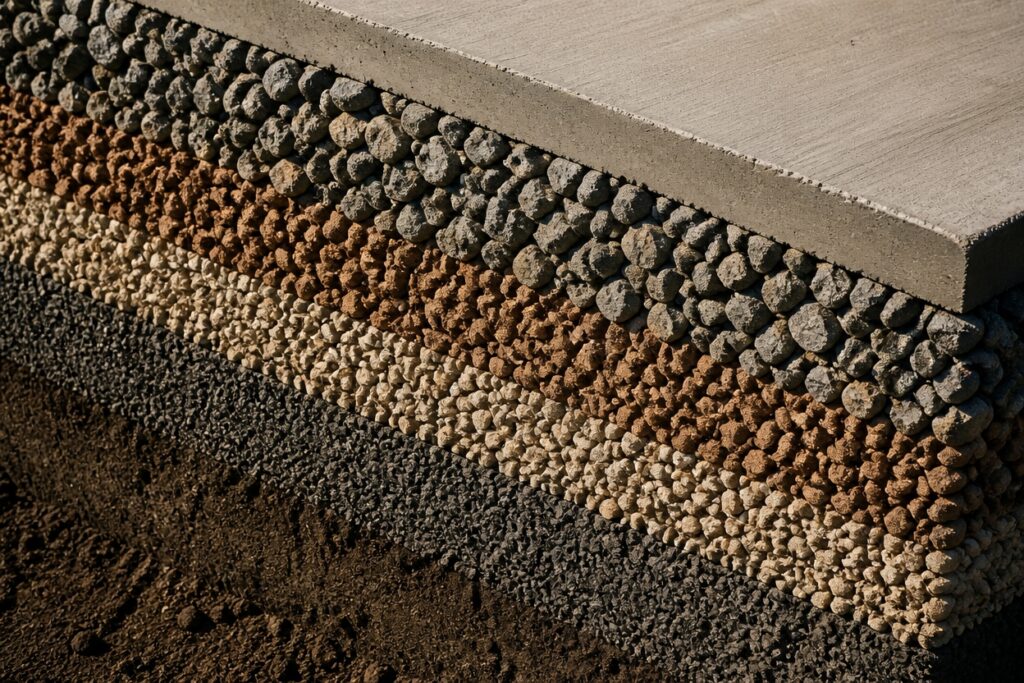
Concrete slabs crack for reasons that are frustratingly simple. A skimpy gravel base. Water pooling underneath. Soil that shifts with the seasons. Small oversights now become expensive headaches later.
A well-built gravel base quietly solves all of this. It spreads the load so your slab does not bear every pound alone. It lets water escape instead of freezing and heaving against concrete. It locks the soil in place.
Not all gravel works the same way, though. The right type and depth make the difference between a patio that lasts decades and one that starts spiderwebbing within a few winters.
The good news is that getting it right is genuinely straightforward once you know what to look for.
Why Your Concrete Slab Fails Without a Proper Gravel Base
Why Concrete Needs a Solid Gravel Foundation
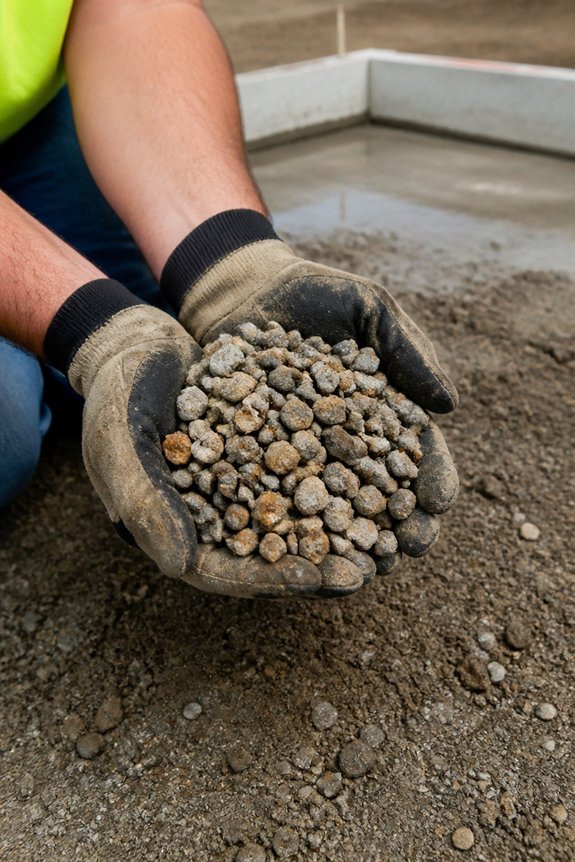
Your concrete slab will crack and settle without a proper gravel base underneath. The ground shifts over time. It soaks up moisture and turns unstable.
Water pools beneath the slab if drainage is poor. Soil then expands and contracts with each freeze-thaw cycle. This movement creates pressure your concrete cannot handle.
Uncompacted earth settles unevenly. Stress points form. Cracks follow soon after.
Common Problems From Poor Base Preparation
Surface cracks appear first. Corners start sinking next. Structural damage often comes last, but it always costs more to fix.
Poor gravel bases lead to all of these issues. The right gravel layer stops direct soil contact. It channels water away and gives your slab steady support.
Skip this step and repairs come early. Full replacement sometimes happens within just a few years.
How Gravel Prevents Settling, Heaving, and Cracking
A properly compacted gravel base prevents the three main concrete failures: settling, heaving, and cracking. Gravel allows water to drain away, which stops moisture from building up beneath the slab. Without good drainage, soil expands when it freezes. That expansion pushes upward and fractures the concrete above.
Gravel also spreads weight evenly across the ground. This reduces uneven settling that would otherwise crack the slab. A layer of compacted gravel, usually four to six inches thick, creates a solid foundation. The stone particles interlock with each other, which resists soil movement from temperature swings and water infiltration. Proper gravel prep fills in voids where water would otherwise collect. This protects the concrete from freeze-thaw damage and shifting earth over time.
Drainage: The Hidden Benefit That Protects Your Slab
Water beneath a concrete slab causes serious damage. Trapped moisture builds hydrostatic pressure. This pressure pushes upward against the concrete surface.
That upward force leads to efflorescence, spalling, and gradual deterioration. Your slab weakens with every season.
A gravel base solves this problem. The loose particles create natural spaces. Water moves through these gaps and drains downward into the soil.
Sand layers often sit above or below the gravel. They filter fine particles and speed up drainage even more.
Without proper drainage, water pools beneath your slab. Mold takes hold. Concrete loses strength. The structure’s lifespan drops sharply.
Good drainage protects your investment. It keeps your slab dry, stable, and strong for years to come.
Choosing the Right Gravel Type and Size for Your Project
Choosing the Right Gravel for Concrete Slabs
Gravel selection matters more than most people realize. Crushed limestone, crushed granite, and recycled asphalt all work well for base layers.
Angular stones compact better than rounded pea gravel. This makes them far more stable beneath heavy concrete.
Size and Mix
Gravel size ranges from one-half inch to three-quarters inch. Smaller particles fill gaps between larger stones. Larger stones provide the structural backbone.
A well-graded mix combines multiple sizes. This creates ideal density and prevents shifting.
What to Avoid
Skip beach sand and clay. These materials trap moisture and weaken foundations over time.
Making Your Choice
Local availability and cost will guide you. Still, never sacrifice quality for savings.
Test your soil drainage first. Coarse gravel suits wet conditions. Finer gravel works where drainage is already adequate.
Calculate Your Ideal Gravel Base Depth
Once you’ve chosen your gravel, it’s time to figure out how deep it needs to go. Most concrete slabs need a base that’s four to six inches thick.
Patios and sidewalks usually do well with four inches. Driveways and industrial areas need six inches or more to handle the extra weight.
Your soil matters too. If drainage is poor, add extra gravel to help water flow away. Compact your gravel in two-inch layers. This prevents settling and keeps everything stable.
Local factors also play a role. Heavy rain, deep frost lines, or extreme temperatures may require a thicker base. Check your local building codes for specific requirements in your area.
Compact Your Gravel the Right Way (No Settling Later)
Compact Your Gravel the Right Way (No Settling Later)
Proper compaction turns loose gravel into a solid foundation. It resists settling under the weight of concrete. Plate compactors and hand tampers work well for this job. Apply steady pressure across the surface.
Work in thin layers instead of rushing. Two to four inches at a time is ideal. Make several passes over each layer until it feels firm. This builds the density you need.
Skipping proper compaction invites trouble. Gravel shifts and settles later. Cracks form in your concrete. The surface becomes uneven over time.
Good compaction creates even support beneath the slab. This stops differential settling. Your concrete lasts longer as a result.
Common Gravel Base Mistakes That Cost Thousands in Repairs
Most builders rush through gravel base installation. This creates expensive problems later.
Inadequate compaction causes concrete settling. Cracks appear within months.
Using fine sand instead of crushed stone prevents proper drainage. The support structure weakens over time.
Clay and organic material decompose beneath slabs. Always remove this debris before building.
A base less than four inches thick fails to distribute weight. The slab bears too much pressure.
Poor drainage traps water in cold climates. Frost heave lifts and damages concrete.
Uneven base thickness creates soft spots. Concrete shifts in these weaker areas.
Combined or alone, these mistakes lead to costly repairs. You may need partial removal or complete slab replacement.
Proper base installation saves thousands in future expenses.
Adapt Your Base for Different Climates and Soils
Climate and soil conditions vary across regions. A one-size-fits-all gravel base rarely works well.
Cold climates need deeper gravel layers, usually 4-6 inches. This extra depth accommodates frost heave and thawing cycles. Clay soil areas require better drainage beneath the gravel. Adding sand layers below helps water escape properly.
Sandy regions can use less gravel depth. Compacted sub-base layers become more important here. Wet climates need sloped surfaces and perimeter drainage. These features prevent water from pooling on your base.
Desert installations require dust control measures. Minimal settling is also a key consideration. Always check local building codes before starting. Soil testing results will guide your specific base specifications for your location and ground composition.
Should You DIY or Hire a Professional?
Finding the Right Fit for Your Project
Choosing between DIY and professional help comes down to a few key things. Think about your project size, your own skills, what tools you have, and your budget.
Small patios are often perfect for DIY. Large driveways usually call for a pro. Rental fees, compaction tools, and material delivery add up fast.
What Professionals Bring to the Table
Experienced contractors know soil prep, drainage, and grading. These details prevent headaches later on.
DIY beginners risk mistakes with the base layer. This can lead to cracks, settling, or water damage down the road. Pros also carry insurance and offer warranties for peace of mind.
Crunching the Numbers
Get quotes from local contractors. Compare those costs against your DIY expenses plus the time you’ll spend. This gives you a clear picture of what makes sense for your situation.
Frequently Asked Questions
How Long Does a Gravel Base Typically Last Before Needing Replacement or Maintenance?
A gravel base typically lasts 10 to 15 years before requiring maintenance or replacement. Longevity depends on climate conditions, drainage quality, soil composition, and the weight of structures above it. Regular inspection helps identify compaction or erosion issues early.
Can I Use Recycled Asphalt or Crushed Concrete Instead of Traditional Gravel?
Like a square peg in a round hole, recycled asphalt and crushed concrete can work as base materials, though they compact differently than traditional gravel. They’re viable alternatives if properly graded and compacted to prevent concrete settling or shifting issues.
What’s the Cost Difference Between DIY Gravel Installation and Professional Installation?
DIY gravel installation typically costs 50-70% less than professional services, ranging from $0.50-$2 per square foot for materials alone. Professional installation adds labor costs of $1-$3 per square foot, depending on location and project complexity.
How Does Gravel Base Installation Affect My Project Timeline and Concrete Curing?
Proper gravel base installation typically adds 1-3 days to project timelines. A well-compacted base promotes drainage, reducing curing time by preventing moisture accumulation. Poor installation extends curing periods and compromises concrete longevity.
Will a Gravel Base Help With Freeze-Thaw Damage in Cold Winter Climates?
While concrete alone deteriorates rapidly in freeze-thaw cycles, a properly installed gravel base provides essential drainage that mitigates moisture infiltration—the primary cause of winter damage. Water drains away instead of pooling beneath, preventing destructive ice expansion.
Conclusion
Ironically, the most overlooked foundation component determines concrete longevity. Property owners often skip proper gravel preparation, then spend thousands on repairs later. A well-compacted, appropriately sized gravel base prevents settling, manages water drainage, and reduces cracking—yet remains invisible beneath the slab. Investing modest time and money upfront in gravel installation proves far cheaper than addressing foundation failure afterward. Concrete durability depends entirely on what lies underneath.